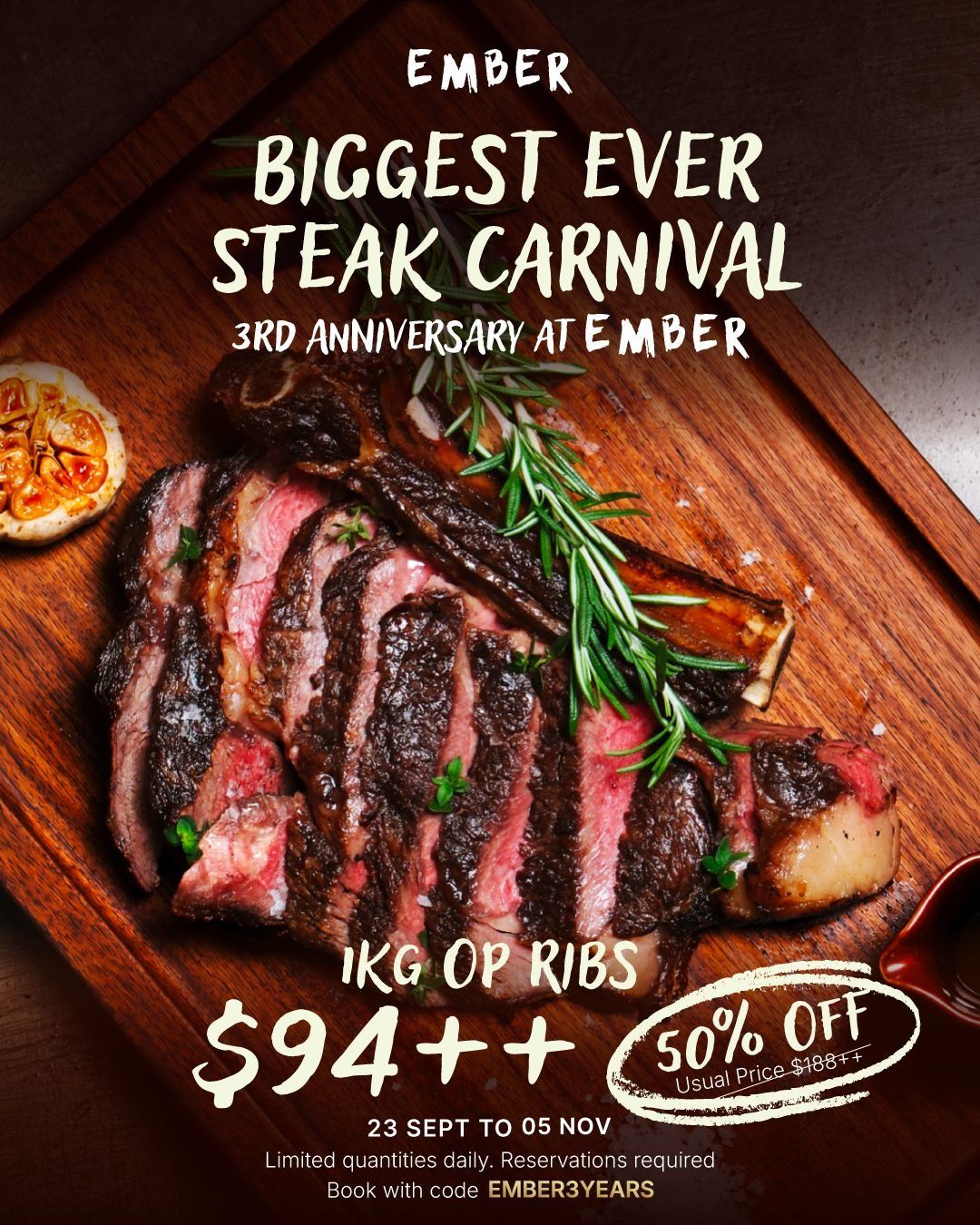


If you have been searching for koji-aged beef in Singapore, Ember Restaurant is one of the very few dining rooms in the country where this centuries-old Japanese technique meets premium Australian grain-fed cattle. The result is a ribeye so deeply savoury, so tender, and so richly marbled that a single bite answers every question you had about why koji ageing is having a moment on the world’s finest menus.
What Is Koji Ageing?
Aspergillus oryzae — the mould culture known as koji — has been the backbone of Japanese food for over a thousand years. It ferments rice into sake, soybeans into miso, and wheat into soy sauce. Applied to beef, its enzymes work differently: they penetrate the outer muscle fibres and break down proteins and fats at a molecular level, producing a dramatic tenderising effect and generating glutamate compounds that translate directly into umami depth on the palate.
Traditional dry-ageing relies on time, cold air, and the beef’s own enzymes. Koji ageing compresses that process and adds a flavour dimension that dry-ageing alone cannot achieve — a subtle nuttiness, a faint sweetness, and a finish that lingers long after the last mouthful.
Ember’s Koji-Aged ABG 150-Day Grain-Fed Ribeye
At Ember, the koji ribeye starts with cattle from Australia’s Angus Beef Genetics (ABG) programme, grain-fed for a minimum of 150 days. Longer grain-feeding builds fat cover and inter-muscular marbling before the beef even reaches the koji chamber. The controlled koji application then spends several days working through the outer surface, sealing moisture in while the enzymatic activity concentrates flavour.
The finished cut is seared at high heat in Ember’s kitchen to deliver a crust that crackles with Maillard caramelisation, while the interior stays tender and pink. The fat renders silky, carrying that signature koji nuttiness from the first bite through to the finish.
Why Koji-Aged Beef Is Rare in Singapore
Koji ageing demands precision. The humidity, temperature, and duration of the application must be managed carefully — too long and the mould overpowers the meat; too short and the enzymatic effect is minimal. Very few restaurants in Singapore have the sourcing relationships and kitchen expertise to execute koji ageing consistently. Ember’s close work with its Australian suppliers means the ribeye arrives already treated, ensuring every plate meets the same standard.
How to Pair It
The glutamate intensity of a koji-aged ribeye calls for a wine with enough structure to stand alongside it without fighting it. Ember’s cellar leans toward Old World bottles — think a northern Rhône Syrah with black pepper and olive tones, or a mature Barolo where the tannin has softened to a velvet grip. If you prefer white, a skin-contact orange wine with texture and grip can be surprisingly compelling.
Reserve Your Table
Ember is open for dinner Monday and Tuesday, and for both lunch and dinner Wednesday through Sunday. The koji-aged ribeye is available while stocks last.
Make a reservation at Ember and experience Singapore’s most distinctive steak for yourself.